Thursday, August 25, 2011

Honey

Ukrainians eat a lot of honey and can wax eloquent for hours on its myriad benefits. Recently a friend asked if I was interested in purshasing some honey from friends of friends who are beekeepers. Here's how our conversation went:

me: I don't think I want to buy any more honey right now, because I already have two liters, and it took me a full year to eat the two liters I bought last summer

friend: I don't understand how you can eat it so slowly--I thought you liked honey

me: I do! I put it in everything--in my yogurt, in tea, I even recently started putting it in my coffee... I eat it whenever I feel like it.

friend: Well I don't call that liking honey--I like honey and I eat a half liter per week

me: Wow, I would call that more of an obsession. and isn't that rather expensive? I would think the average Ukrainian family couldn't afford that.

friend: No, I think they could, I mean they eat it a lot of sugar... [does quick calculations] ...and it's only 7 times more expensive than sugar!

I chalked her remarks up to a natural desire to see oneself as non-elitist. Most Ukrainians complain constantly about rising food prices, when most of the time the prices are only rising a few cents (though, admittedly, they do rise fairly often). But the idea that anyone who wants to could switch from sugar to honey because it's only 7 times more expensive is beyond ludicrous. When I got home I calculated that at the price she pays for honey, it would cost $70 a month, which is over 25% of the average Ukrainian monthly salary, for each member of a family of four to eat the same amount of honey weekly that she does!

image stolen borrowed from here

Wednesday, May 4, 2011

I can tell I’ve been living in Ukraine for a long time because…

…when I first heard about Bin Laden’s death my first instinct was to doubt it. Not that I really fully rejected the notion that he had indeed been killed. In fact, for the sake of the US’ goal of de-terrorist-ifying the world, I hoped he had been. But I instantly felt a stab of doubt—“what if?” I mean, there are certainly some suspicious circumstances surrounding his death.

I am not a full-fledged deather (get it? If birthers demand birth certificates, then deathers demand death certificates). But whereas before I would have instantly dismissed such doubts as the stuff of conspiracy theories, they now seem understandable, because frankly, Ukrainian cynicism is beyond anything I’ve previously encountered. Obama’s a Muslim? Bush orchestrated 9/11? Both Obama and Bush are/were Masonic puppets? These are all legitimate points of view. And while I still think all of those claims are ridiculous, I do find myself questioning things I see/read/hear more than I used to.

image from: here

Friday, January 28, 2011

Belarus

Jay Nordlinger, a blogger and columnist who frequently writes about human rights abuses, recently trained his pen on Eastern Europe, writing three columns about Alexander Lukashenko and the recent elections in Belarus.

I thought I'd write my own mini series of "impromptus" in response:

-You mentioned Vladimir Neklyaev several times, and he first came on my radar a few months ago thanks to this little verse of his quoted in a Radio Free Europe article:

"Uladzimer Nyaklyayeu, who is believed to be the strongest challenger of Lukashenka, is a Belarusian poet. Therefore, it is no wonder that he used his campaign appearance on television as an opportunity to quote from his writings. The following unlovely four-liner (rendered lightheartedly into English by your author) clearly alludes to Lukashenka's habit of roller-skiing in summer:
I am on the asphalt
but I cannot glide.
Are my skis lazy?
Or am I out of my mind?"

-At the height of the Russia-Belarus tensions over gas this past summer, a Russian TV station ran a documentary showing Lukashenka in a very unfavorable light and chronicling some of his human rights abuses, "The Godfather." Many in the region recognized the irony in the situation, though, which is that one could easily replace "Lukashenka" with "Putin" throughout the documentary, and it would pretty much all be true.

-The previous point gets at the disturbing truth that while Belarus may be "Europe's last dictatorship," Russia, Ukraine, and other former Soviet republics are still very, very far from a democracy. There were cries of foul play all over the place in the Ukrainian local elections that took place last fall. In the small town near Kiev where I live, the mayoral election was stolen by the candidate from the president's party, and everyone knows it. The former prime minister, Yulia Tymoshenko and a number of high-ranking members of the previous administration are (or soon will be) prosecuted by the current administration, and there have been massive purges on all levels of government (even in non-ideological jobs at the city level) replacing entire offices with people from the president's party. And I know that Russia's even worse.

-Just as during the Soviet Union, Belorussians have lots of political jokes (and just as during the Soviet Union, they dispense them with care). One I've heard goes like this: 'Someone asks Lukashenka, "Do koli [till when] will you be president?" To which he responds, "That's right, do Koli [till Kolya]."' Kolya is the nickname for Nikolai, Lukashenka's son. Or another one: 'Some journalists ask Lukashenka, "How many languages do you know?' To which he replies that he knows five. Asked to list them he replies, "Written Russian, spoken Russian, written Belorussian, spoken Belorussian, and English." "Could you say something for us in English?" "Hände hoch [Hands in the air]!" he responds. "But that's German!" "Well then I guess I know six."

Wednesday, January 19, 2011

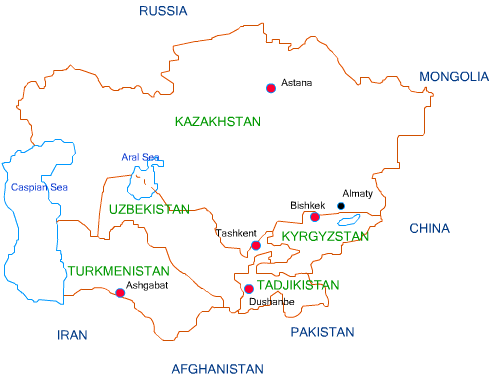
Current Events in Central Asia

My favorite source for news on Central Asia is Radio Free Europe's individual RSS feeds for each country. However I tend to go a few weeks without reading them, then knock out a month's worth of news in one sitting. Today I was catching up on events in Kyrgyzstan and was struck by how grim things are looking there currently. Here is a sampling of recent headlines:

-Another Kyrgyz Region Joins Teachers' Pay Protest

-Uzbekistan 'Cuts Natural Gas Delivery' to Kyrgyzstan due to debt

-Kyrgyz Veterans Hold Hunger Strike Over Sovial Allowances, which haven't been paid since 1994

-Kyrgyzstan Says Foils Bishkek Bomb Attack

-Trial Of Ousted Kyrgyz President's Brother Resumes In Bishkek. He is being tried (in absentia) in connection with deaths of anti-government protestors.

-Emigration From Kyrgyzstan 'Up sharply' in 2010. It rose 10%, mostly due to ethnic Uzbeks leaving during the violence in June.

-Appeal Hearing For Former Kyrgyz President's Nephew Resumes. He is on trial in connection with ethnic violence in June

-Kyrgyz Miners on Hunger Strike to Protest Sacking of Leader

-[Parliament] Member 'Attacked' in Northern Kyrgyzstan

-Uzbek Banks Suspend Money Transfers to Kyrgyzstan in connection with ethnic violence last summer.

So, to summarize: Miners, teachers, and veterans are on strike; there has been one averted terrorist attack plus several other incidents of violence; the former president's brother and nephew are on trial; and Kyrgyzstan's relationship with its nearest neighbor, Uzbekistan, is very, very shaky.

Other sobering Central Asia wide headlines included:

-Report Says Decline in Freedom Continues Across Former Soviet Union
-Another Uzbek Inmate Dies Suspiciously in Prison

-Iran Sends Tajikistan Equipment For Hydropower Plant

-Beijing’s Stealthy Expansion in Central Asia

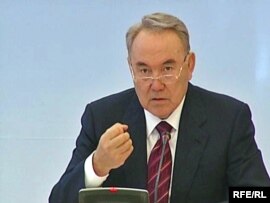
And lastly, Kazakhstan news has been dominated by the current debate over extending President Nursultan Nazarbaev's term to 2020. Nazarbaev, who has been in power for 20 years now, since the fall of the USSR, has always been more or less a benevolent dictator, maintaining higher levels of religious freedom, stability, and prosperity than in other Central Asian countries, but tolerating no opposition. But until now he has always at least kept up the pretence of democracy, so this new move is troubling.

Friday, December 17, 2010

What you won't read in Vladikavkaz newspapers

Below is my translation of an article by a journalist from newspaper in Vladikavkaz, North Ossetia, in the North Caucasus region of Russia. The newspaper was supposed to print the article, however at the last minute the editor decided not to print it as he received word from somewhere that ASR was a sect. This is a favorite tactic of the Russian Orthodox Church, which has tremendous political power in Russia. The journalist gave us permission to use the article and include her name.

Alexander Plukci: “Our main goal is to save young people”

For the third year now Association for Spiritual Renewal staff member Alexander Plukci has been selflessly carrying out serious work with the youth of Vladikavkaz in local schools and colleges. This is not a matter of him imposing his beliefs and ideas on young people—it is spiritual formation of the next generation.


Sometimes in the course of searching for interesting information journalists have to visit a lot of organizations and institutions and meet a lot of different people, and this time was no exception. But my efforts were not in vain. I arrived at School #5, and made my way through a crowd of kids to the third floor. A video lecture was being shown at that moment in one of the classrooms, and what I saw shook me to the depths of my soul. Alexander Plukci was holding a lecture on abortion for 10th graders. Looking at the teens, who were listening to the lecture with genuine interest and watching the screen, I remembered my own school years when there could be no mention of “forbidden” topics during class time, which stood in sharp contrast to Alexander Plukci, who speaks in an accessible and interesting way with high schoolers and college students about some of the most pressing issues of our time such as HIV and AIDS, sexually transmitted infections, smoking, drug addiction, alcoholism, abortion, human trafficking, sexual assault, and domestic violence in an attempt to protect youth from making serious mistakes in life.

Alexander moved to North Ossetia in 2004 after the terrorist attack in Beslan. He was among the many who showed up to offer psychological help to children and adults who had been held hostage by terrorists in the Beslan school. Alexander is originally from Moldova, but has been living in Ossetia for six years now. Here he works with the Association for Spiritual Renewal (ASR). ASR carries out a number of educational and community outreach project, seeking to address various societal problems and needs. “Our main goal,” says Alexander, “is to save young people.” Alexander is concerned by the prevailing corruption of the younger generation, and people’s loss of moral values:

“Since I’ve become a Russian citizen I am now concerned with Russia’s future, because I want my children to live in a country without immorality and drug addiction. Of course, the media has an enormous negative influence on the younger generation. We need spiritual reformation. Watching youth, I see degradation taking place. Young people can’t even answer simple questions. Of course I’m not talking about everyone. There are wonderful, talented young people. I see their eyes change after what they see and hear in my lectures. In my lectures I use statistics, I talk about the problems, I share historical facts, give real life examples, sometimes I will do small experiments in lecture. For instance, before the lecture on human trafficking, I will call five people to the front of the class and ask them what they would do if they were offered a job overseas and the opportunity to earn more money than they could earn here in Vladikavkaz. If a few of them say they would accept the offer, I explain that that is precisely how they could end up victims of human trafficking.”

As part of the NEXT Generation project Alexander Plukci had visited many of the schools and colleges of Vladikavkaz. The program is aimed at a large segment of the youth population. It has been created in hopes that through it the younger generation will come to reject drugs, alcohol, and other dangerous habits, and taking their place will be moral values, new principles in life. And this work has brought fruit. The fruit can be seen in the responses of some of the students:

Fatima, 10th grade: “Alexander Plukci’s lectures make me think about a lot, teach me lot, and warn about a lot. The topics are covered comprehensively and understandably. Almost everything in them is surprising and even shocking. Each lecture is a colossal dose of interesting and useful information! I can’t choose a favorite topic because all of them made an impression on me. I always reflect on what I’ve heard and seen, and share it with my friends and peers. My retelling of it is not, of course, as interesting as the original, but my friends listen to me, and after our talks go research the topics further on the internet. Upon analysis of each lecture I find something important to take away, which truly influenced me. I actually even tape-recorded a few of the lectures and played them for my father. He approved of them and respects Alexander greatly. He respects him because he’s not afraid to discuss serious issues with the younger generation, and because he’s found a way to get through to them.”

Marat, age 20, Student body president of the North Caucasus Mountain Metallurgical Institute (NCMMI): “The lectures I saw and heard made me think about things I’d never thought about before. I learned much that was new and useful. I think this needs to be shared with everyone if we want our children to live in a good, kind, pure world.”

William, age 18, NCMMI student: When I attended the lecture on abortion I was moved to tears hearing about how unborn children are killed. A phrase on one of the PowerPoint slides especially made me think: ‘For some, life ends before birth.’ I will share what I heard and saw with all my friends. I want to help them choose the right path in life.”

Is any more proof needed of the importance of what Alexander Plukci is doing for our youth? Here is what he himself says about the NEXT Generation project: “The meaning of our project’s name, NEXT Generation, is that in today’s world, moral values have been turned upside down. That which used to be considered shameful is now considered normal. NEXT Generation is the era of the next generation, which will change our future. It will be a time for a different type of youth, who won’t drink, smoke, or lead a wild life, but will teach eternal values such as purity, kindness, love, and wisdom.”

In ages past moral degradation has led to the collapse of great nations, including the Roman and Babylonian empires. In modern society a lack of boundaries has led hundreds of millions of people to drug use, alcoholism, smoking, sexual immorality, and criminal activity. Russia is in the midst of a demographic crisis, a loss of moral values and devaluation of spiritual cultures. Youth are the future of Russia, and they are also the most vulnerable category of society. It’s better to prevent a sickness than to treat it. We can’t save the whole world, but we can at least save someone, here and now.

By Zalina Guburova

Wednesday, December 8, 2010

Kalmykia

November 19th we held our biannual day-long conference/seminar/meeting for Schools Without Walls (SWW) coordinators and teachers from Russia, Ukraine, Belarus, and Moldova. I love these meetings because they are an opportunity to talk with our coordinators from some of our more far-flung locations, such as Siberia, Russia’s Far East, and the North Caucasus. This meeting was no exception, as I got to hear about how a group of young Russian believers from Krasnoyarsky Krai came to start holding children’s summer camps in Mongolia, some interesting tidbits about life in Siberia, and a lot of background information about one of SWW’s newest locations, the Republic of Kalmykia.

SWW in Kalmykia was started by the ever-active staff of our center in Vladikavkaz, who already run SWWs in North and South Ossetia and Chechnya. They teamed up with a local Kalmyk believer, Sangadzhi, to organize a SWW group in the capital, Elista. Sangadzhi was at our November meeting and shared some background on Kalmykia with me. Here’s a summary of what I learned:

The population of Kalmykia is about 300,000, half of whom are ethnic Kalmyks, and other half of whom are a mix of other North Caucasus people groups. Because of the ethnic diversity Russian is still used extensively. The Kalmyk people are closest ethnically and linguistically to Chinese/Mongolians. They left China and moved to the Caucasus in the 17th century. There are still about a million Kalmyks in China, as well as large diasporas in Mongolia, France, and the US.

Like the Chinese, Kalmyks are traditionally Buddhist, and Kalmykia is the only predominately Buddhist republic in Europe, as well as the center of Buddhism in Russia. However the main opposition to Evangelical Christianity in Kalmykia comes not from Buddhists, but from the Orthodox Church, which, like everywhere in Russia, has massive political influence in Kalmykia, and would rather see Kalmyks remain Buddhists than become Evangelical Christians.

Unlike other North Caucasus republics, where there has been a large influx of Western missionaries in recent years, there is not a single Western missionary in Kalmykia. The only outside missionary in Kalmykia is a Russian from Krasnodar. There have been Western missionaries in the past, who completed translation of the New Testament into Kalmyk. However no work has been started yet on the Old Testament.

The two major pastimes in Kalmykia are chess and wrestling. Former president of Kalmykia Kirsan Ilyumzhinov is also the president of the World Chess Federation, and has done a lot to popularize this ancient game in his republic: chess is a required subject in all academic institutions, and Elista is the home of the world’s youngest grandmaster—a 17-year-old. Everyone plays chess, from the youngest to the oldest.

It is difficult to over-emphasize how big wrestling is in the North Caucasus as a whole, and Kalmykia in particular. Many national, European, and world champion wrestlers have come from Kalmykia. Sangadzhi himself is a wrestler who used to be on the Russian national team. He has found wrestling to be a great tool for spreading the Gospel. Every year he and other believers organize wrestling camps for young men, 60-70% of whom are non-Christians. Many young men come from neighboring republics, including Chechnya, to attend the camps. They have seen a handful of young men come to Christ through these camps. In addition to the camps, Sangadzhi uses wrestling as a witnessing tool throughout the year. Despite the fact that he no longer wrestles competitively he still goes to the gym and works out regularly. After a two-hour work-out with the guys in the gym, he says, they are fast friends, and will often go to the sauna together afterwards, where he can then share the Gospel with them.

The average church size in Kalmykia is 20 members, with the absolute largest being 70. Therefore it was encouraging to see the lively response to the opportunity to study in SWW on the part of young leaders wanting to acquire a solid Biblical education. SWW, which held its first session in Kalmykia in October 2010, has turned out to be the perfect tool to train and motivate a generation of young Christians capable of serving their nation, changing society, and turning the hearts of their peers to Jesus.

The Wrestling Academy classroom rented for the second SWW session was packed with over 40 representatives of various Evangelical churches. We are confident that SWW is in Elista to stay. The only suggestion for improvement that Sangadzhi had was to find a bigger space for the December session, where 55 students are expected.

Sunday, November 7, 2010

Ukrainian Proverbs

A friend lent me a book of aphorisms, A Spartan Conversation, by Ukrainian author Gustav Vodichka (a pen name—you’ll see why in a minute). I understood about half of them, and of those a large portion are untranslatable. Of the remainder, I present a selection which I think provides some insight into Ukrainian thinking.

All the Ukrainian nation received from the Soviet Union was the Holodomor. Everything else went to the oligarchs.

If you oppose both those in power and the opposition—you are of the people.

Dictatorship is when shots are fired into the crowd; democracy is when shots are fired out of the crowd.

In order to increase the standard of living for the people, you must decrease the standard of living for those in power.

You get moral politicians when they see immoral ones hanging in front of them.

The ends justify the bullet.

“It’s good when you have a goal in life,” thought the sniper.

The future lies with the oligarchs—let’s get them out of the way!

Quoting Socrates is not philosophy. Philosophy is thinking like Socrates. [ironic, considering this post is a compilation of quotes…]

The smarter the computer, the stupider the people.

The most difficult age for children is when they ask you to babysit the grandkids.

He took care of me up until marriage, now I have to take care of him for the rest of our lives.

The only things that are absolute are monarchy and crap.

A sign reads, “The gallows in the city square are VIP only.”

The Ukrainian national dish is pig cellulite.

Thursday, September 23, 2010

A Matter of Taste


When I came to Ukraine, I thought I knew all about Russian (and therefore Ukrainian) food—what I liked and (more frequently) didn’t. I figured if I didn’t like something after almost 12 years living in the former Soviet Union, I wouldn’t start liking it now. However I’ve found that a combination of my tastes “maturing” and having more prolonged exposure to some foods which I previously disliked (thanks to living with a Ukrainian family and eating lunch together with my Ukrainian co-workers every day) a lot of things which I disliked before I’ve come to tolerate or even, in some cases, enjoy. Here are some of the things which my attitude towards has changed:

Pickled mushrooms: I don’t actually remember trying pickled mushrooms as a kid, but Ukrainians/Russians love everything picked, and I did try pickled tomatoes (which are among things that I still dislike despite my 2 years of intense exposure) and onions and disliked them, and I know that the idea of pickled mushrooms would have freaked me out. I’ve found, however that I really truly genuinely enjoy them, even in salads which would have sounded weird and gross to me before, such as a combination of pickled mushrooms, onions, cheese, pineapple, boiled eggs, and mayonnaise.

Dried fish are one of the things I remain less than thrilled about.

Borscht (and beets in general): Vegetable soup. I hated it as a kid, but now I can eat it with equanimity, and sometimes even with pleasure. I think a breakthrough moment was realizing that the bright red color doesn’t usually come so much from the beets as from tomato paste, which I actually like… However I’ve found that I don’t mind beets in general so much now either. I can actually make it through a helping of beet salad if I must.

Kvas: A fermented drink usually made out of brown bread. It’s similar to beer, but a bit sweeter, and with much less of an alcoholic taste (it’s considered non-alcoholic—children drink it all the time, but most versions of it have about a 1% alcohol content). I was surprised to find that I don’t mind it, though I can’t usually drink more than one cup, and would never choose it over water or coke or any other traditional cold drink. The best kvas I’ve had was made with birch tree juice—it was lighter and sweeter than usual.

Raw onions and garlic: Ukrainians love these… a lot. As in eat-an-entire-head-of-raw-garlic-in-one-sitting lot. I haven’t gotten to the point of being able to eat raw onions or garlic straight yet but I have no problems with eating salads or other dishes with generous amounts of one and/or the other.

Parsley and dill: Ukrainians put chopped parsley and dill on everything, from soups to salads to meats to potatoes. I still don’t like indiscriminate dumping of copious amounts of both on every dish, but I’ve come to appreciate both flavors in certain contexts.

Kefir: I used to refuse to touch this drink that is like buttermilk or very watery plain yogurt. And while I still won’t drink it by the glassful like Ukrainians, I’ve come to like it as a base for cold soups such as okroshka (which can also be made with kvas, which I’ve also eaten and enjoyed), and may be moving in the direction of actually being able to drink it.

There are, however, things I have not yet made peace with: Dried or raw fish, pickled tomatoes, kholodets (basically beef jello), salo (pig fat… sorta like bacon, but without the strips of meat, and eaten uncooked), mayonnaise. So there’s still room to grow…

Kholodets. Makes me shiver just looking at it.

Friday, August 27, 2010

Snippets

Last week I traveled to the Donetsk Region in Eastern Ukraine to visit various groups involved in ministry to orphans/adoption. I wish I could share everything I saw and heard on the trip--it was really incredible--but I think I'll just stick with a few snippets.

Snippet #1:
The first place we visited was Pilgrim Republic Orphanage in Mariupol. It's actually not so much an orphanage as a street kids' rehabilitation center. They pick kids up off the street, filthy, flee-ridden, addicted to drugs, covered in sores, HIV-positive, with tuberculosis, and utterly neglected and unloved, and they turn them into the smiling urchins you see on the right. They help them recover from drug/alcohol addictions, get cleaned up and healthy, catch up in school, and get used to living indoors, and then try to reunite them with their biological families, find foster/adoptive families for them, or if they turn 16 by the time this whole process is complete, they will help them find somewhere to live and help them get into college or get a job. They've literally saved hundreds of children's lives, and they have changed Mariupol from being a magnet for street kids from all over Ukraine, into a town that street kids avoid like the plague!

Snippet #2:

I think the highlight of the trip for me were our visits to 5 adoptive families in the next town we visited, Slavyansk, playing with their adorable kids and hearing their stories. The family at the left lives in very primitive conditions--basically a shack that is falling apart, no running water, heated by a wood-burning stove, three tiny rooms--but they decided a year ago to adopt then 4-year-old Diana and 2-year-old Daniel. And now they've learned that Diana and Daniel have an 8-month-old biological brother with heart problems who has also been abandoned by their mother, and they want to adopt him too! Oh, and did I mention that they also have their 20-year-old biological son living with them?

Snippet #3:
Another family we visited that really stuck with me was the family on the right. The older daughter is biological; they initially adopted younger daughter Veronica, then they heard that Veronica's birth mom had given birth to a boy and then died (of TB or AIDS, I can't remember which), and that there was something wrong with him and his relatives didn't want him, so they decided to adopt him as well. Two-year-old Nazar has cerebral palsy, and has progressed hugely since they got him. His progress is partly due to them taking him to massage once a week, despite it being a two-day ordeal, and costing $20, which for them is a lot. And amazingly, they are interested in adopting again!

Snippet #4:

We also visited 2 rehab centers in Mariupol. They are absolutely Spartan, but they are really changing people's lives. We met a woman who had killed her abusive husband and spent 10 years in prison for it; another woman who came to the Lord, got married, and had a daughter all while in prison--now she's at the rehab center waiting for her husband to serve out his term; the director of one of the rehab centers is an HIV-positive former drug addict, married to a wheelchair-bound HIV-positive former drug addict, but amazingly they have a healthy son!

There are many more stories I could tell, but that will have to do for now...

Wednesday, June 23, 2010

Kyrgyzstan

I have been following (or attempting to) the conflict in Kyrgyzstan (one of my homelands) with horror. The following is my attempt to sum up the situation there using conversations with people from there I met recently, links from my family, a lot of Radio Free Europe, and other odds and ends:


Ironically, the sign in the bottom right says "Peace to the World."


Statistics:
Various sources confirm the following statistics:
-more than half of Osh residents have left the city
-over 400,000 refugees (300,000 internally displaced; 100,000 fled to Uzbekistan)
-over 200 people killed
-over 2,000 injured

Many accounts of rape, homes being set on fire (often with people inside burning to death), hands being cut off, looting, beating, killing, etc.

E (a pastor from Bishkek) shared that a believer from the South had participated in transporting Uzbeks to safety, and at a road blockade Kyrgyz rebels discovered in his car lists of Uzbeks whom had helped or planned to help. They beat him, and at one point forced him to stretch out his hand and waved an axe over it. Something stopped them from chopping off his hand, but it was God’s grace, as there have been many, many reports of chopped off hands.

Causes:
To summarize—it is unclear exactly how it started. It appears to be an inter-ethnic dispute, but it’s unclear who started it, and some even say it is politically motivated.

Radio Free Europe correspondent:
“Like I said, the Uzbeks have their version of the story and the Kyrgyz have their version of the story. And the level of violence appears to have been equal on both sides, and the tactics used on both sides also appear to be equal.
While you can get a little bit clearer picture of the chronology of events -- when it started, where it spread to -- it’s difficult to exactly [say] who provoked the conflict. The Uzbeks will say the Kyrgyz came into their neighborhood, and the Kyrgyz say the Uzbeks showed up in their neighborhood.
So it's hard to believe everything everyone says -- it's hard to believe entirely because on both sides there has been a lot of suffering and a lot of death. But it's very difficult to say -- I guess the truth lies somewhere in between what they are saying right now.
I think fear sparked a lot of this stuff.”

An overview of the beginning of the current conflict, which says it started with a dispute over access to pastures in May:.

Opinion: this is not just random, spontaneous ethnic violence, but appears to have been carefully planned and politically motivated


History:
Osh and Jalalabad, the two cities where the violence took place, are located in the Ferghana Valley, the densely-populated multi-ethnic “bread basket of Central Asia.” The valley was divided up rather arbitrarily by the Soviets, and the Uzbeks see the Kyrgyz in these cities as encroaching on their ancestral territory. Similar violent inter-ethnic conflict broke out in the region almost exactly 20 years ago, in June 1990.

Long overview of the history of the Ferghana Valley

Brief overview of Ferghana Valley:
"So, when the Soviet mapmakers came along between 1917 and the mid-1930s and redrew all the maps, they really had no meaning. But since the fall of the Soviet Union, those lines they drew on maps 80 years ago have suddenly taken on great significance. And people really do recognize that there is a border of a Kyrgyzstan, of an Uzbekistan, whereas until 1991 or '92 that had almost no meaning at all. And traditionally the people -- and by traditionally I mean hundreds and thousands of years -- would have just wandered freely from one place to another without recognizing any borders or without there having ever been any borders there."

the 1990 dispute and how it was resolved:
"The interethnic violence in 1990 was started over a water dispute. A group of Uzbeks settled on a patch of land that had water running through it -- the Ferghana Valley is also the breadbasket of Central Asia, it's the agricultural area that really feeds almost the whole population of greater Central Asia. That situation erupted. Some Kyrgyz felt that the land that was given to the Uzbeks wasn't fairly given to them.
This land dispute developed into a much wider conflict that pitted Kyrgyz and Uzbeks against each other, similar to what we are seeing today. To give you an idea of what it would take to stop this current unrest -- at the time both those countries were part of the Soviet Union and the Soviet Army had to pour thousands of troops in. Remember, many Soviet soldiers were based right in that area at the time. But it took thousands of troops a week to get the unrest under control and to restore any sense of stability. Of course, there aren't that many troops in the area any more."

Referendum: There is also a referendum planned for June 27th on switching from a presidential to a parliamentary system. R (another believer from Kyrgyzstan) suggested that perhaps the conflict was motivated by a desire to demonstrate problems with a parliamentary system, which would leave the country without a strong, authoritative figure, capable of taking swift measures to put an end to conflicts such as this. Kyrgyzstan is currently ruled by a provisional government, instituted after an April revolution, which has proven itself unable to deal with such a challenge (despite provisional president Rosa Otunbaeva being, according to R, “a good woman”), and the fear is that a parliamentary system would prove just as ineffective in a crisis situation. The upcoming referendum also intensifies the need to stabilize the situation, as legitimacy requires that people in the affected regions also be able to freely participate in the referendum, which currently looks nearly impossible in the planned timeframe.

Solutions:
R believes that the best and only way to put an end to the violence is to nip it in the bud. It is how the Soviet Union put an end to the Osh Massacre 20 years ago. The problem is that there is now no Soviet Union, Kyrgyz troops have proven ineffective, and in some cases have even joined in on violence against Uzbeks, and despite Kyrgyzstan’s appeals, Russia has so far refused to send in troops. Another possible solution, according to R, is to find a scapegoat, which will unite Kyrgyz and Uzbeks, “The only solution is to find a common enemy. Maybe that’s overly cynical, but that’s the only solution I can see.” In Soviet times it was the Soviet Union and Russians. Now, the two possibilities that Ruslan sees are Tajiks and Islamic extremists.

Here is an interesting opinion piece also arguing for Russia to send in troops.

A Radio Free Europe correspondent argues that Russia is unlikely to do so:
“But the big problem is – and this is going to be true for anyone who is looking to help – you have to look at the lessons of 1990. In order to restore order in the area in a time like this, you have to be willing to commit thousands of soldiers who are going to be there probably weeks, maybe months. And you have a weak government in Bishkek. So it's unclear if that government is going to make it through the rest of the year. So exactly who are you defending? If the government that requested you to restore order is in danger of falling, or does fall, then where does that leave you with your troops on the ground? You could end up with a new government that does not want you there and perceives you as the enemy and an occupier on their territory.”

Photos